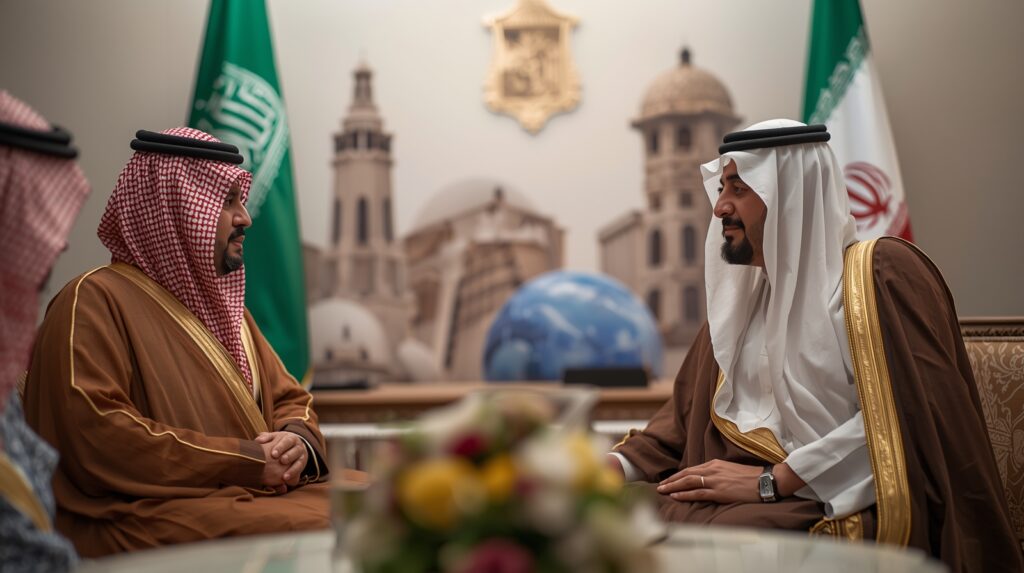

The Middle East continues to serve as a critical arena in global geopolitics. The shifting relationships between Saudi Arabia, Iran, and other regional powers are reshaping the region’s strategic and economic framework. The evolution of diplomacy, trade, and energy cooperation has redefined alliances and changed the traditional balance of power. This article explores these developments in detail, tracing political, economic, and security trends that define the new order emerging in the region.
2. Historical Background of Rivalry and Cooperation
2.1 The Legacy of Division
- The rivalry between Saudi Arabia and Iran has deep historical and ideological roots.
- Competing political systems and leadership claims in the Islamic world created a long-term power struggle.
- Key events, including the Iranian Revolution and the Iran-Iraq War, intensified the divide.
2.2 Early Efforts at Dialogue
- Despite differences, both nations have periodically engaged in diplomatic outreach.
- The early 1990s saw limited cooperation in oil policy and regional stability talks.
- Periodic dialogue attempts failed to establish sustained trust due to external interference and domestic factors.
3. The Changing Regional Context
3.1 Post-2011 Regional Turbulence
- The Arab Spring created new uncertainties across the region.
- Power vacuums in Syria, Yemen, and Iraq altered the regional balance.
- Both Saudi Arabia and Iran expanded influence through proxy and diplomatic channels.
3.2 Global Shifts in Energy and Security
- Declining global dependence on Middle Eastern oil reshaped leverage dynamics.
- New energy producers, including the United States, diversified global supply.
- Regional actors adjusted strategies to maintain relevance in the changing global system.
4. The Saudi-Iran Rapprochement Process
4.1 Diplomatic Reengagement
- In recent years, both countries have moved toward controlled normalization.
- Talks mediated by China, Iraq, and Oman paved the way for renewed diplomatic relations.
- Restored embassies and diplomatic channels created an environment for dialogue.
4.2 Motivations for Reconciliation
- Saudi Arabia’s Vision 2030 aims to diversify the economy and reduce regional tensions.
- Iran seeks relief from isolation and improved access to regional markets.
- Both nations recognize the cost of prolonged confrontation and instability.
4.3 Role of External Mediators
- China emerged as a significant facilitator, leveraging economic influence to mediate.
- Regional states such as Oman and Iraq supported negotiations quietly.
- The process illustrated the growing autonomy of Middle Eastern diplomacy from Western mediation.
5. Regional Implications of Saudi-Iran Normalization
5.1 Security Environment
- The normalization reduced immediate threats of escalation in Gulf waters.
- Confidence-building mechanisms focused on border security and maritime safety.
- Proxy confrontations, while not fully resolved, have been partially contained.
5.2 Economic Cooperation Potential
- The reestablishment of trade and investment channels offers long-term economic benefits.
- Regional logistics, tourism, and energy connectivity are key growth areas.
- Mutual participation in infrastructure initiatives supports economic stability.
5.3 Diplomatic Balance
- The normalization created new flexibility for regional dialogue frameworks.
- Smaller states, including Kuwait, Qatar, and the UAE, adjusted policies accordingly.
- Multilateral engagement replaced unilateral confrontation as a regional norm.
6. The Broader Geopolitical Context
6.1 Reduced U.S. Involvement
- The U.S. pivot to Asia altered regional dynamics.
- Middle Eastern actors diversified partnerships with China, Russia, and emerging economies.
- The resulting multipolar landscape encouraged self-reliant diplomacy.
6.2 The Rise of China’s Role
- China’s mediation demonstrated its growing influence in global diplomacy.
- Economic engagement through Belt and Road projects strengthened Beijing’s presence.
- The approach emphasized non-interference and economic pragmatism.
6.3 Russia’s Strategic Calculus
- Russia continues to balance relations with both Iran and Saudi Arabia.
- Cooperation in OPEC+ aligns mutual interests in energy pricing.
- Moscow’s engagement maintains its foothold amid global competition.
7. The Energy Dimension
7.1 Shared Interests in Oil Market Stability
- Saudi Arabia and Iran both rely heavily on oil exports for fiscal balance.
- Cooperation in OPEC+ structures helps manage production levels and price stability.
- Coordinated production decisions signal pragmatic economic cooperation.
7.2 Investment and Diversification
- The transition toward renewable energy affects regional strategies.
- Both nations seek to expand petrochemical and alternative energy sectors.
- Energy partnerships support diversification away from single-commodity dependence.
7.3 Energy Routes and Security
- Maritime routes in the Persian Gulf remain vital for global trade.
- Joint efforts to secure shipping lanes improve investor confidence.
- Reduced tensions encourage international shipping and logistics growth.
8. The Role of Smaller Regional Powers
8.1 United Arab Emirates and Qatar
- The UAE balances strong economic ties with both Saudi Arabia and Iran.
- Qatar maintains an independent diplomatic approach centered on mediation.
- Both states contribute to reducing tensions through flexible foreign policies.
8.2 Iraq and Oman
- Iraq’s intermediary role reinforces its strategic importance in the region.
- Oman continues to provide a neutral platform for dialogue and negotiation.
- These smaller states serve as stabilizers in a complex regional system.
9. Regional Organizations and Collective Security
9.1 GCC and Regional Dialogue
- The Gulf Cooperation Council (GCC) has shifted toward pragmatic engagement.
- Saudi-Iran normalization influenced GCC discussions on collective defense and economic integration.
- Dialogue-based security initiatives now complement traditional alliances.
9.2 Regional Integration Proposals
- Infrastructure and energy connectivity projects are expanding.
- Cross-border investment zones and trade corridors strengthen cooperation.
- A shift toward economic interdependence reduces incentives for confrontation.
10. Challenges to Lasting Stability
10.1 Ongoing Proxy Conflicts
- Yemen remains a testing ground for regional cooperation.
- Syria’s reconstruction and Iraq’s stability require coordinated efforts.
- Long-term conflict resolution depends on sustained dialogue mechanisms.
10.2 Domestic Political Pressures
- Internal economic and governance reforms influence foreign policy flexibility.
- Public opinion and elite interests may affect the pace of rapprochement.
- Both governments manage competing priorities in domestic and regional arenas.
10.3 External Strategic Uncertainties
- Great power competition introduces unpredictability.
- U.S., Chinese, and Russian engagement in the region can shift balances quickly.
- Regional autonomy requires consistent diplomatic coordination.
11. The Economic Realignment
11.1 Trade and Investment
- Regional markets are integrating through bilateral and multilateral agreements.
- Non-oil sectors, including logistics and digital trade, are gaining importance.
- China and India serve as expanding markets for Middle Eastern exports.
11.2 Financial Cooperation
- Efforts toward regional financial connectivity are emerging.
- Cross-border banking, payment systems, and investment funds are under discussion.
- Economic pragmatism supports gradual diversification of external dependencies.
11.3 Infrastructure and Connectivity
- Projects such as the Gulf railway network and digital corridors link regional economies.
- Coordination between port authorities strengthens global trade competitiveness.
- These initiatives reduce logistical barriers and improve intra-regional efficiency.
12. The Role of Religion and Cultural Exchange
12.1 Religious Dialogue
- Pilgrimage coordination between Saudi Arabia and Iran enhances cultural diplomacy.
- Shared Islamic platforms foster limited but meaningful cooperation.
- Religious engagement supports societal-level normalization.
12.2 Media and Public Perception
- State media narratives are adjusting toward cautious neutrality.
- Cultural and educational exchange programs are under exploration.
- These steps create gradual normalization in public sentiment.
13. Strategic Outlook
13.1 Regional Equilibrium
- The Saudi-Iran dynamic remains central to the broader Middle Eastern balance.
- Regional actors increasingly prefer stability over confrontation.
- Multilateral cooperation is becoming a structural feature of Middle Eastern diplomacy.
13.2 Global Implications
- Energy market coordination impacts global price stability.
- Diplomatic realignments influence international trade and security policies.
- The Middle East is transitioning from conflict-based to negotiation-based geopolitics.
13.3 Long-Term Trends
- The evolution of regional relations suggests sustained pragmatic engagement.
- External actors will continue to influence but not dominate outcomes.
- Regional self-determination is strengthening as global power diffuses.