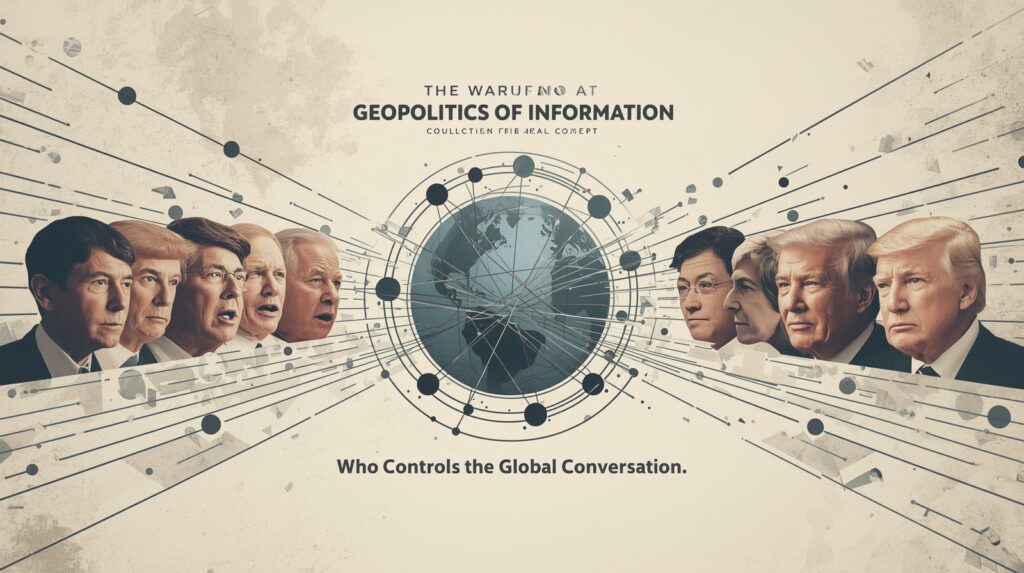

The 21st century has transformed information into a core dimension of power. Control of data, narratives, and communication networks defines how nations compete and cooperate. The geopolitics of information explores who manages, distributes, and influences the global flow of knowledge.
As digital platforms, artificial intelligence, and global media expand, the struggle over information has become a central feature of world politics. This article examines how states, corporations, and individuals shape the global conversation, how information infrastructures are governed, and what this means for the balance of power in international relations.
2. Information as a Strategic Resource
2.1 Defining Information Power
- Information power is the ability to collect, process, and distribute knowledge that influences behavior or decisions.
- It is comparable to economic or military power in strategic importance.
- The capacity to control information determines perception, policy, and legitimacy in global affairs.
2.2 From Industrial to Information Age
- Economic and political systems are increasingly dependent on data.
- Digital technology allows real-time communication across borders.
- Information networks have become infrastructure for diplomacy, commerce, and security.
2.3 Information and National Security
- Intelligence, cybersecurity, and surveillance depend on data access.
- States integrate information management into defense strategies.
- Protection of digital sovereignty is now a major security concern.
3. Historical Context: Evolution of Information Control
3.1 The Print and Broadcast Era
- Control of information began with state monopolies on printing and broadcasting.
- Governments used censorship, licensing, and propaganda to shape narratives.
- The Cold War marked an era of media competition between global powers.
3.2 The Internet Revolution
- The Internet decentralized communication, giving individuals a global voice.
- New actors, including technology firms and social movements, entered the information space.
- Power shifted from governments to hybrid public-private systems.
3.3 The Digital Age and Global Connectivity
- Mobile communication and social media redefined access to information.
- Connectivity increased transparency but also manipulation risks.
- The digital divide became a new form of geopolitical inequality.
4. The Architecture of Global Information Power
4.1 Technology Infrastructure
- The Internet depends on cables, satellites, data centers, and platforms.
- Ownership and management of these systems influence access and control.
- Major powers invest in digital infrastructure to secure influence.
4.2 Platforms and Gatekeepers
- A small number of corporations mediate most global communication.
- Algorithms determine visibility and reach of content.
- Regulation of platforms has become a contested political issue.
4.3 The Role of States
- Governments regulate digital communication within borders.
- Some states pursue data localization and digital sovereignty policies.
- International competition involves standard-setting and technology exports.
5. The United States and the Information Order
5.1 Early Leadership
- The U.S. shaped the architecture of the global Internet through innovation and investment.
- American technology firms dominate social media, search, and software markets.
- English became the primary language of global digital communication.
5.2 Institutional Influence
- U.S.-based organizations set key Internet governance standards.
- Global media networks project cultural and political perspectives.
- Academic and research institutions contribute to the global flow of information.
5.3 Strategic Challenges
- Rival states seek to reduce dependence on U.S. platforms.
- Domestic debates about privacy and regulation affect international credibility.
- The global information order is transitioning toward greater diversity of control.
6. China and the Information Sphere
6.1 Digital Sovereignty and Control
- China promotes state-managed information systems.
- Internet regulation supports national stability and strategic communication.
- Censorship and content management create a distinct information ecosystem.
6.2 Global Technology Expansion
- Chinese technology firms operate globally in telecommunications and digital services.
- Infrastructure projects such as digital Silk Road expand influence abroad.
- Data sharing and standard-setting become tools of soft power.
6.3 Competing Models
- China’s approach contrasts with open Internet principles.
- It emphasizes control, national interest, and long-term planning.
- This model attracts interest in regions seeking greater information autonomy.
7. Europe’s Regulatory Role
7.1 Data Protection and Governance
- The European Union prioritizes privacy and data rights.
- The General Data Protection Regulation (GDPR) sets a global benchmark.
- European policies influence global corporate practices.
7.2 Digital Sovereignty
- Europe aims to reduce dependency on external technology providers.
- Investment in cloud computing and AI supports independent capacity.
- The EU promotes balanced governance combining market freedom with accountability.
7.3 Global Impact
- European regulation affects multinational corporations worldwide.
- Collaboration with democratic partners reinforces open information principles.
- The EU’s normative influence contributes to digital diplomacy.
8. Russia and Information Strategy
8.1 Information Warfare and Strategy
- Russia integrates information operations into national defense.
- Influence campaigns combine media, cyber tactics, and narrative management.
- Information is viewed as a domain of strategic competition.
8.2 Media Networks
- State-backed outlets operate internationally to project alternative perspectives.
- Coverage emphasizes critique of Western policies and values.
- Information dissemination supports geopolitical interests.
8.3 Cyber and Digital Tools
- Cyber operations target communication infrastructure and political systems.
- Digital capabilities reinforce conventional power.
- Russia promotes sovereignty-based Internet governance models.
9. The Role of Emerging Powers
9.1 India
- Expanding digital infrastructure supports domestic and international outreach.
- Technology diplomacy enhances partnerships in the Global South.
- India promotes inclusive and developmental approaches to information access.
9.2 Middle East and Africa
- Regional media networks shape local and international discourse.
- Investment in digital industries diversifies economies.
- Regional cooperation on cybersecurity and media standards is increasing.
9.3 Latin America
- Independent digital media challenge traditional narratives.
- Regional data policies emphasize fairness and inclusion.
- Partnerships with global technology firms raise sovereignty questions.
10. Information Warfare and Influence Operations
10.1 Disinformation and Manipulation
- Disinformation campaigns seek to influence elections, policies, and public opinion.
- Techniques include fake news, social media bots, and coordinated amplification.
- Detecting and countering manipulation is a growing security priority.
10.2 Strategic Communication
- Governments use coordinated communication to promote national interests.
- Effective messaging builds credibility and trust.
- Public diplomacy adapts to digital communication formats.
10.3 Information Security
- Protection of information integrity is essential to political stability.
- Cyber defense integrates technical and communication strategies.
- Collaboration among states and corporations strengthens resilience.
11. Corporate Influence and Digital Platforms
11.1 Data Ownership
- Major technology firms control vast amounts of personal and behavioral data.
- Data becomes a key asset for economic and political power.
- Ownership concentration raises questions of accountability.
11.2 Algorithms and Visibility
- Algorithmic curation shapes what information audiences encounter.
- Platform policies affect representation and access to ideas.
- Transparency in algorithm design remains limited.
11.3 Private Governance
- Companies perform quasi-governmental roles in content moderation.
- Platform rules influence political discourse and social norms.
- Balancing freedom of expression with regulation remains a challenge.
12. Global Information Governance
12.1 Multilateral Organizations
- The International Telecommunication Union and Internet Governance Forum coordinate standards.
- Disagreement over control and access defines international negotiations.
- Fragmentation risks creating regional Internet systems.
12.2 Data Sovereignty
- Nations demand control over data generated within borders.
- Conflicts arise between global commerce and national regulation.
- Cross-border data governance remains underdeveloped.
12.3 Norms and Principles
- Global discussions focus on openness, privacy, and accountability.
- Competing values reflect cultural and political diversity.
- Agreement on universal digital rights remains limited.
13. The Role of Artificial Intelligence
13.1 Information Creation and Automation
- AI generates, filters, and translates vast volumes of content.
- Automation accelerates information flow but increases manipulation risks.
- AI-based tools influence perception and decision-making.
13.2 Deepfakes and Synthetic Media
- Synthetic media challenges authenticity and verification.
- Detection technologies aim to preserve trust in communication.
- Legal frameworks lag behind technical innovation.
13.3 AI and Power Distribution
- States with advanced AI capabilities shape information standards.
- Control of AI infrastructure becomes a new dimension of power.
- Global cooperation is necessary to prevent misuse.
14. Civil Society and Information Freedom
14.1 Independent Media
- Investigative journalism maintains accountability and transparency.
- Digital platforms provide space for new forms of reporting.
- Financial sustainability remains a core challenge.
14.2 Digital Activism
- Online campaigns mobilize social and political movements.
- Hashtag movements amplify voices excluded from traditional media.
- Activism depends on digital access and freedom of expression.
14.3 Information Rights
- Freedom of information is essential for democratic participation.
- Censorship and surveillance undermine civic trust.
- International organizations advocate for digital rights protection.
15. Information Inequality
15.1 The Digital Divide
- Unequal access to Internet infrastructure limits participation.
- Rural and low-income populations face connectivity barriers.
- Investment in digital literacy is essential for inclusion.
15.2 Language and Representation
- Dominance of certain languages restricts content diversity.
- Translation technologies expand accessibility but remain uneven.
- Cultural representation influences perception and policy.
15.3 Data Access
- Information asymmetry favors powerful states and corporations.
- Open data initiatives promote transparency and collaboration.
- Fair distribution of information resources is a growing global issue.
16. The Future of the Global Conversation
16.1 Decentralization of Information Power
- Emerging technologies enable local and regional information systems.
- Blockchain and decentralized networks reduce dependence on central platforms.
- New models of governance may balance openness and security.
16.2 Collaboration and Regulation
- International cooperation is essential for information integrity.
- Multilateral frameworks must adapt to technological change.
- Regulation should balance innovation with accountability.
16.3 Information and Global Stability
- Control of narratives influences geopolitical alignment.
- Transparent communication supports trust and peacebuilding.
- Shared governance of information is key to sustainable global order.